2026 Tata Nano EV : Tata Motors is bringing back the legendary Nano, but this time as a fully electric powerhouse designed for India’s bustling streets.
After years of speculation and rumors, the 2026 Tata Nano EV promises to redefine affordable mobility with zero emissions and modern tech.
A Legacy Reborn in Electric Glory
Remember the original Tata Nano? Launched in 2008 as the world’s cheapest car at around ₹1 lakh, it aimed to put India on wheels but stumbled due to safety woes and perceptions of it being a “poor man’s car.”
Fast forward to 2026, and Tata is flipping the script with an EV revival. Ratan Tata himself owns a retrofitted Nano EV by Electra EV, hinting at personal endorsement for this green makeover.
Industry whispers suggest the relaunch taps into India’s booming EV market, where sales hit record highs last year.
Tata, already a leader with Tiago EV and Nexon EV, sees the Nano as the entry-level disruptor. Expected to hit roads mid-2026, it’s timed perfectly with government subsidies pushing EVs under ₹10 lakh.
Compact Design Meets Urban Smarts
The new Nano EV sticks to its tiny footprint—around 3.1 meters long—but with a sleeker, futuristic vibe. Think rounded headlights, aerodynamic lines, and LED accents that scream “city ninja.”
Inside, it’s surprisingly roomy for four adults, with a minimalist dashboard featuring a 7-inch touchscreen for infotainment, Bluetooth, and Apple CarPlay/Android Auto.
Safety gets a massive upgrade over the old model: dual airbags, ABS with EBD, traction control, and a 360-degree camera in top trims.
Ground clearance stays at 180mm for pothole-prone roads, while alloy wheels and power steering make maneuvering in Delhi traffic a breeze. It’s built tough with a reinforced chassis to handle India’s diverse conditions.
Powertrain That Packs a Punch
At its heart is a zippy electric motor churning 40-50 bhp, paired with a 15-20 kWh lithium-ion battery. Claimed range?
A solid 200-315 km on a single charge, perfect for daily commutes or quick errands—charge it overnight at home in 4-5 hours or hit 80% in under an hour with DC fast charging. Top speed hovers at 80-105 kmph, zipping from 0-100 kmph in under 10 seconds for overtakes.
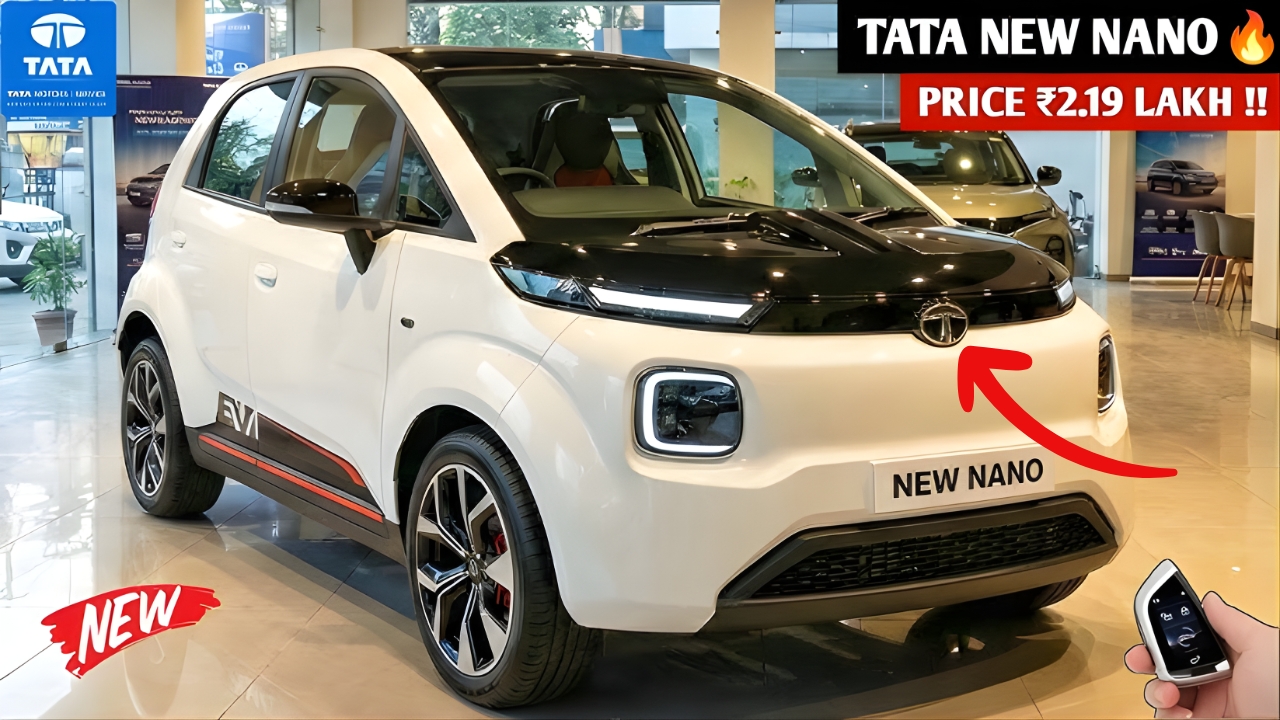
Running costs? Pennies per kilometer, thanks to cheap electricity and regenerative braking. Tata bundles an 8-year battery warranty, easing ownership worries. Variants might include base and premium, with CNG options rumored for hybrids, but EV is the star.
Price Tag That Steals the Show
Priced between ₹3.5-9 lakh (ex-showroom), the Nano EV undercuts rivals like MG Comet EV (₹7-10 lakh). Booking could open soon, with deliveries by festive season 2026.
Subsidies might drop effective price below ₹3 lakh for many, making it the ultimate first-car choice for students, gig workers, and families.
Why India Needs This Now 2026 Tata Nano EV
With urban pollution choking cities and fuel prices soaring, the Nano EV arrives as a breath of fresh air.
It empowers the masses—think auto-rickshaw drivers switching to green rides or tier-2 town folks ditching two-wheelers. Tata’s EV ecosystem, including home chargers and app-based monitoring, seals the deal.
Also Read this – Contact Us
Critics might question if it’s too basic, but for 80% of Indians who drive under 50 km daily, it’s spot-on. Expect queues at showrooms, reviving the 2008 frenzy but with eco-cred. Tata Nano EV isn’t just a car; it’s India’s electric dream democratized.